Exposure to a harmful substance does not always cause immediate symptoms. Some illnesses appear months or even years later. By then, identifying the source of the exposure and proving responsibility might be difficult.
A toxic tort claim allows an injured person to seek compensation after exposure to dangerous chemicals or materials. These cases might involve contaminated water, toxic mold, pesticides, industrial chemicals, asbestos, defective products, or harmful fumes.
Winning a toxic tort claim in Florida requires more than showing that a dangerous substance was present. The victim must connect the exposure to a responsible party and a specific injury.
What Is a Toxic Tort Claim?
A toxic tort is a personal injury claim involving exposure to a substance capable of causing illness or physical harm. Exposure might happen at work, inside a home, near an industrial site, through a consumer product, or in the surrounding environment.
The legal claim might involve negligence, product liability, failure to warn, or another theory. The correct approach depends on where the exposure happened and who controlled, manufactured, distributed, or handled the substance.
Who Was Responsible for the Exposure?
The victim must first identify the person or organization legally responsible for the dangerous condition.
For a negligence claim, the evidence generally needs to show that the responsible party owed the victim a duty of care, failed to meet that duty, and caused an injury. Examples include failing to provide safety equipment, ignoring contamination, storing chemicals incorrectly, or failing to warn people about a known danger.
When a harmful product caused the exposure, the claim might focus on a manufacturer, supplier, or distributor. Evidence might show that the product was defective or lacked proper safety warnings.
Did Exposure Actually Occur?
The victim must prove contact with the substance. This becomes challenging when exposure happened years earlier or occurred in small amounts over a long period.
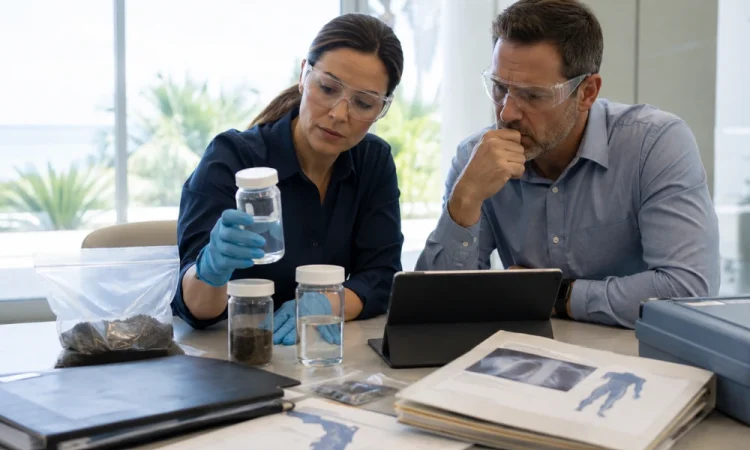
Useful evidence might include:
Workplace and employment records
Environmental inspection reports
Air, water, or soil testing
Product labels and purchase records
Safety reports and chemical data sheets
Photographs or videos of the location
Statements from coworkers, neighbors, or family members
Records showing spills, leaks, or regulatory violations
The victim should also establish how often the exposure occurred, how long it lasted, and the likely concentration or dose.
Can the Substance Cause This Type of Illness?
Toxic tort cases usually involve two forms of causation.
General causation asks whether the substance is capable of causing the particular illness. Specific causation asks whether the exposure caused the illness in this individual. The Florida Supreme Court has recognized this distinction when examining toxic exposure claims.
Scientific studies, toxicology reports, medical literature, and expert analysis often help answer these questions. Florida law requires expert opinions to rest on sufficient facts and reliable methods that were properly applied to the case. Mere suspicion or timing alone might not establish causation.
Is There Medical Evidence of an Injury?
Medical records play a major role in proving damages. Records might document symptoms, diagnoses, treatment, medication, hospitalization, and the progression of an illness.
Doctors might also consider other possible causes, including previous medical conditions, family history, lifestyle, or exposure from another source. A clear medical history helps explain why the toxic substance is the likely cause of the condition.
Victims should keep records of every appointment, test, prescription, and treatment expense.
What Losses Resulted From the Injury?
After establishing responsibility and causation, the victim must prove the value of the resulting harm. Recoverable losses might include past and future medical expenses, lost income, reduced earning ability, pain, disability, and loss of normal daily activities.
Pay stubs, tax returns, employment records, receipts, medical bills, and expert opinions might support these damages.
Why Does Preserving Evidence Matter?
Toxic exposure evidence might disappear quickly. A contaminated area might be cleaned, equipment might be replaced, and witnesses might move away. Medical and employment records might also become harder to locate.
Florida generally provides a two-year filing period for negligence actions, although the correct deadline depends on the claim, exposure, injury, and other facts. Preserving documents and investigating the exposure early gives victims a stronger opportunity to prove what happened.
Toxic tort claims bring science, medicine, and law together. Clear evidence of exposure, reliable expert testimony, documented injuries, and proof of financial loss are often the foundation of a well-supported claim.
This post was written by a professional at Bonardi & Uzdavinis, LLP. Bonardi & Uzdavinis, LLP is a boutique, full service law firm providing its clients with a wide range of representation. Our primary areas of practice include real estate, probate, personal injury, construction, and commercial litigation. If you are looking for a real estate attorney or brandon personal injury lawyer contact us today for a case evaluation today!